How do I prepare my car and myself for driving in snow for the first time?
Prepare for your first winter on US roads with tyre, battery and visibility checks, safer driving habits and a practical emergency kit.
On this page
Reviewed November 12, 2026. SA Connect editorial guide based on official US road-safety guidance.
If you have never driven in snow, the first winter commute can feel intimidating. Preparation helps, but no equipment makes every winter road safe. Check conditions before leaving and be willing to postpone a non-essential journey.
This guide is for first-time winter drivers. It does not replace your vehicle manual, local road restrictions or practical instruction.
Get the car checked before the first storm
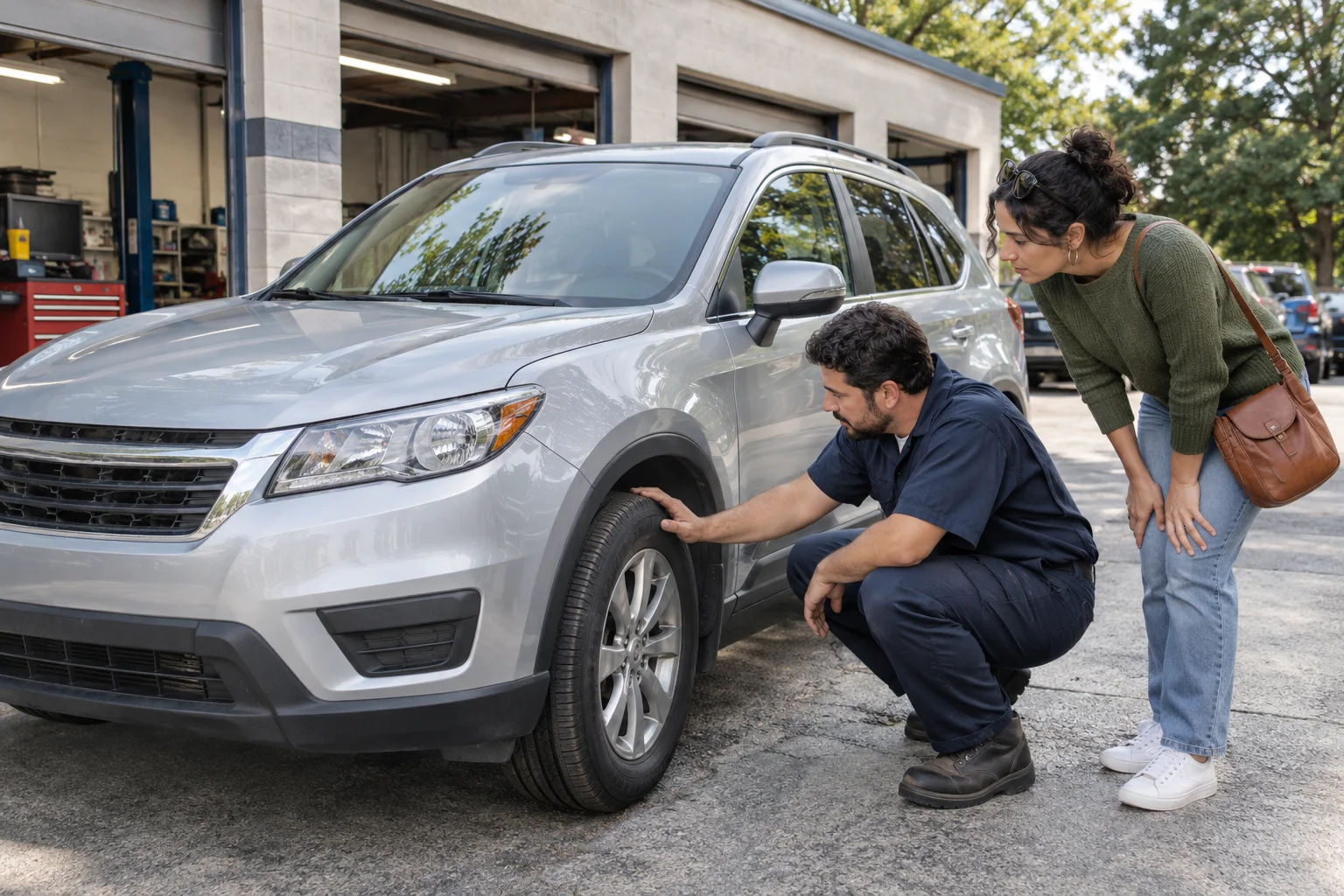
Ask a mechanic to inspect the battery and charging system, tyres, wipers, lights and fluid protection appropriate to your climate. Understand the car’s defrosting controls before you need them. Use the tyre pressures specified on the vehicle’s label or in its manual, not the maximum printed on the tyre.
Cold weather can reduce battery performance and tyre pressure. Address faults early rather than discovering them in a dark car park. Source: NHTSA winter vehicle preparation.
Understand what your tyres and drivetrain can do
Ask a reputable tyre specialist whether your current tyres are suitable for your winter conditions and whether a full set of winter tyres is appropriate. Do not assume that “all-season” means suitable for every winter route.
Colorado’s transport department advises fitting winter tyres as a complete set rather than just two. It also explains that four-wheel drive and all-wheel drive can help a vehicle accelerate, but tyres remain crucial for stopping and turning. A larger vehicle is not a licence to drive faster on ice. Source: Colorado DOT winter-driving FAQs.
Some routes have traction or chain requirements. Check the current rules and your vehicle manual before travelling; equipment requirements in Colorado should not be assumed to apply nationwide.
Leave only when you can see clearly
Allow time to remove snow and ice from windows, mirrors, lights, roof and other surfaces where it could slide or blow off. Clear the car properly rather than scraping a small viewing hole. Confirm that the windscreen is demisted and that the wipers are free before setting off.
Check the forecast and your state’s road-condition service. Know an alternative to exposed or steep routes, and tell someone your route and expected arrival time on a longer journey.
Slow down and make smooth movements
On snow or ice, leave substantially more room to stop. Reduce speed before bends and junctions. Avoid sudden acceleration, sharp steering and abrupt braking. Turn cruise control off on slippery roads, and use low-beam headlights in falling snow.
Michigan’s road-safety guidance warns that AWD and 4WD can hide how slippery a road is during acceleration, leaving a driver surprised when they try to stop. Source: Michigan State Police winter-driving techniques.
Learn the braking system fitted to your car. With ABS, NHTSA advises firm, continuous brake pressure; do not pump an ABS brake pedal. Give snowplows generous space and avoid travelling directly beside them. Source: NHTSA winter driving.
If possible, arrange a winter-driving lesson with a qualified instructor. A busy road during a storm is not a good place to experiment with a car’s handling.
Pack for an unexpected delay
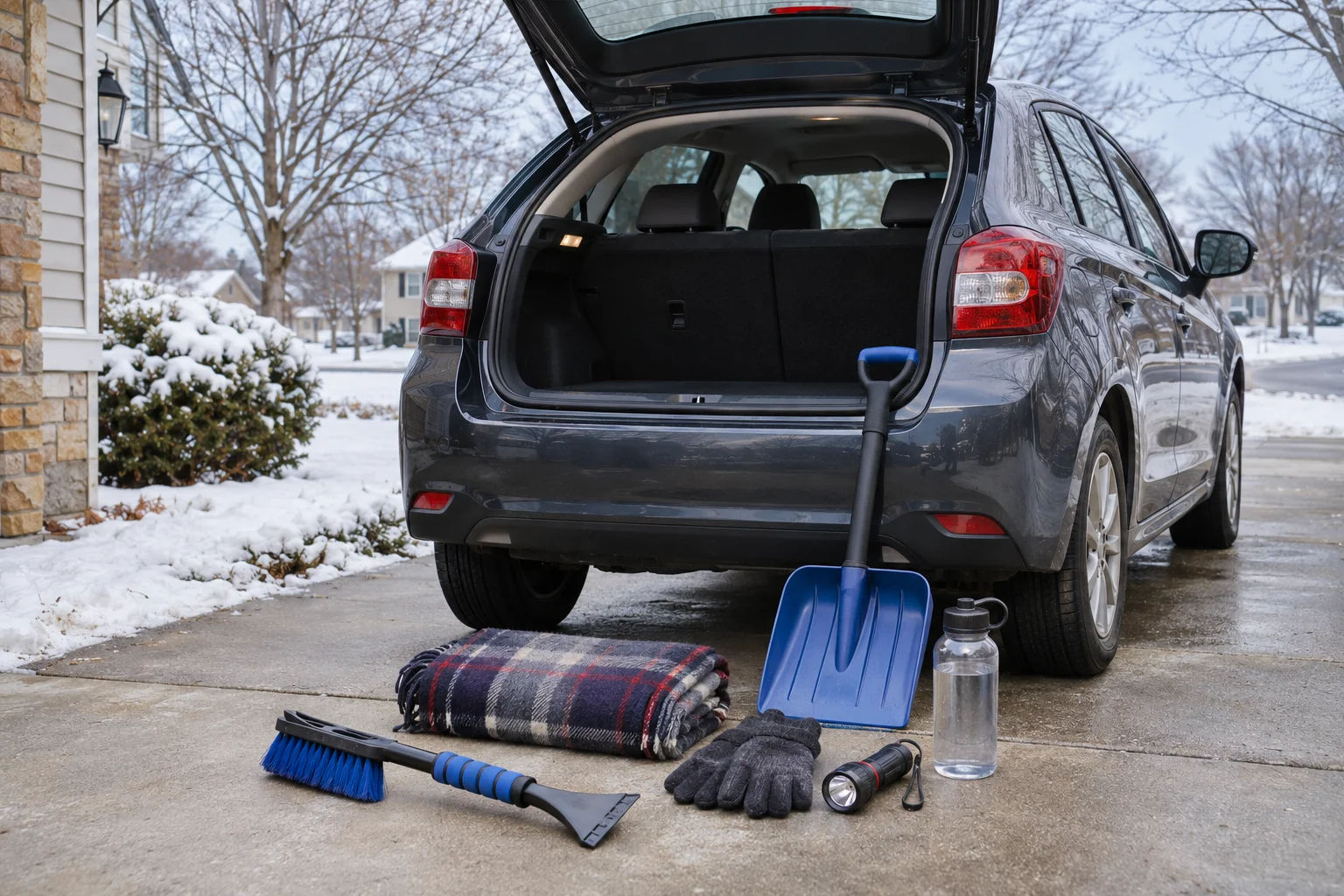
Keep warm clothing, blankets, a snow brush and scraper, a flashlight, a compact shovel, food, water and a phone charger accessible. Add supplies for children, pets or medical needs when relevant. Keep enough fuel or charge for possible delays.
The National Weather Service recommends preparing a winter vehicle kit and checking the forecast before extreme cold arrives. Source: NWS cold-weather preparation.
If you become stranded
Call for assistance and share your location. If it is safe to remain there, stay with the vehicle rather than walking into dangerous weather. If you need to run the engine for warmth, keep the exhaust clear of snow and run it only intermittently; a blocked exhaust can cause carbon-monoxide poisoning. Never run the engine in an enclosed space. Source: NHTSA winter emergencies.
Your goal for the first winter is not to prove you can handle every journey. It is to build safe habits and recognise when staying put is the better decision.
Community question: What helped you feel more confident during your first winter on American roads?
www.nhtsa.gov
Open link