How do I find community, make friends and manage homesickness in the USA?
Practical ways for South Africans to find community, make friends, stay connected to home and seek support while settling into life in the USA.
On this page
Reviewed November 12, 2026. SA Connect editorial guide.
Moving countries changes the small things that used to make a day familiar: the people you could visit without much planning, the voices around you and the places where someone knew your name. You can be glad you moved and still miss South Africa.
There is no deadline for feeling settled. A practical starting point is to create a few regular points of connection, rather than expecting to build an entire new circle immediately.
Choose something you can repeat
A weekly activity gives you a reason to see the same people again. Look at nearby library programmes, recreation centres, walking groups, community gardens, hobby classes or volunteer organisations. If faith is part of your life, a local faith community may be another option.
Choose something you would enjoy even if you did not make a friend on the first visit. Check the cost, accessibility, transport and schedule before committing. CDC suggests building different kinds of connections, joining shared-interest groups and making social contact part of a routine. Source: improving social connectedness.
Our practical suggestion: choose one activity that is close enough and affordable enough to attend more than once. Familiar faces can make the next conversation easier.
Keep a connection to home while making room for here
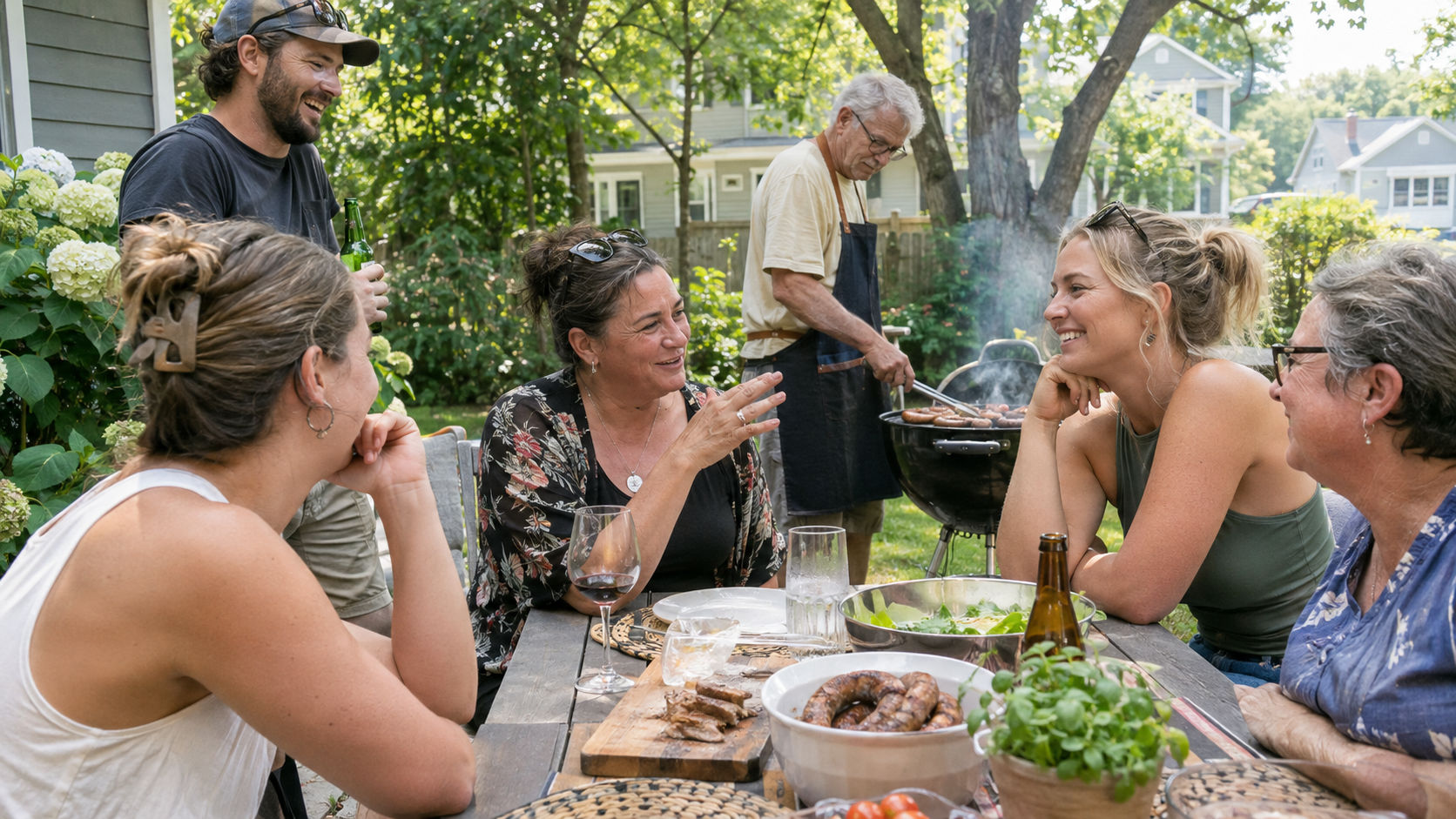
Speaking Afrikaans or another home language, watching familiar sport or sharing a braai can be comforting. South African groups can also help you find people who understand the practical details of starting again.
You can use SA Connect to look for conversations and events, while also getting to know people through your neighbourhood, work and other interests. A shared hobby can be a useful starting point even when your backgrounds are different.
Arrange calls with family and friends back home at times that work for both households. US time-zone differences and daylight-saving changes can affect the gap. Consider keeping a regular call time while leaving some evenings open for local plans.
Make invitations small and specific
You do not have to organise a large gathering. Try a manageable invitation: “I'm going for a walk at the park on Saturday morning. Would you like to join?” Or ask a colleague whether they would like to have lunch together during a break.
If someone is unavailable, it does not automatically mean they are uninterested. Notice whether they suggest another time, and leave space for the relationship to develop. Friendship is not a task you can finish by a particular date.
Meet someone new in a public place, arrange your own transport and let someone you trust know your plans. Keep your home address and sensitive documents private until there is a genuine reason to share them. A shared nationality does not by itself establish trust.
Give ordinary days some structure
A familiar meal, a walk, a hobby or a regular bedtime can give the week a shape while other things are still uncertain. Keep the plan realistic for your finances, work and energy. Rest does not have to be earned by completing every moving-related task.
NIMH's self-care guidance includes sleep, physical activity, enjoyable activities and staying connected with supportive people. These habits can support well-being, but they do not replace professional care when it is needed. Source: caring for your mental health.
Ask for support when it is getting harder
Homesickness is not a diagnosis, and you do not need to label every difficult day. But if low mood, anxiety, sleep problems or loss of interest are persistent, worsening or interfering with everyday life, speak with a healthcare professional. You do not need to wait until things feel unbearable.
A primary-care provider can discuss concerns and help identify appropriate support. Ask about language preferences, cost, insurance and appointment availability when arranging care. Source: NIMH help for mental illnesses.
A small plan for this week
Choose one person back home to contact, one local activity to investigate and one simple invitation to make. Treat that as a starting point, not a test of whether you are settling in successfully.
Community question: Where did you meet your first friend after moving to the USA?
This is general community and well-being information, not a diagnosis or mental-health treatment plan.
www.cdc.gov
Open link