How to prevent mold in your US apartment or house
New to the USA? Learn simple ways to control moisture, spot early mold problems and know when to contact your landlord or get professional help.
On this page
If you are settling into a US apartment or house, add moisture checks to your household routine. You may know the word as “mould”; American English spells it “mold.”
Your new home may have different ventilation, heating and maintenance needs from your previous one. Start by learning how its bathroom fan, kitchen exhaust and humidity controls work.
Start with moisture, not a stronger cleaner
Mold needs moisture to grow. Leaks and damp materials deserve attention even before visible spots appear. The EPA recommends drying wet building materials and furnishings within 24–48 hours. Act promptly rather than waiting for that window to pass. A stain that keeps returning needs its underlying water problem addressed. EPA: ten things to know about mold (https://www.epa.gov/mold/ten-things-you-should-know-about-mold).
Five habits that help
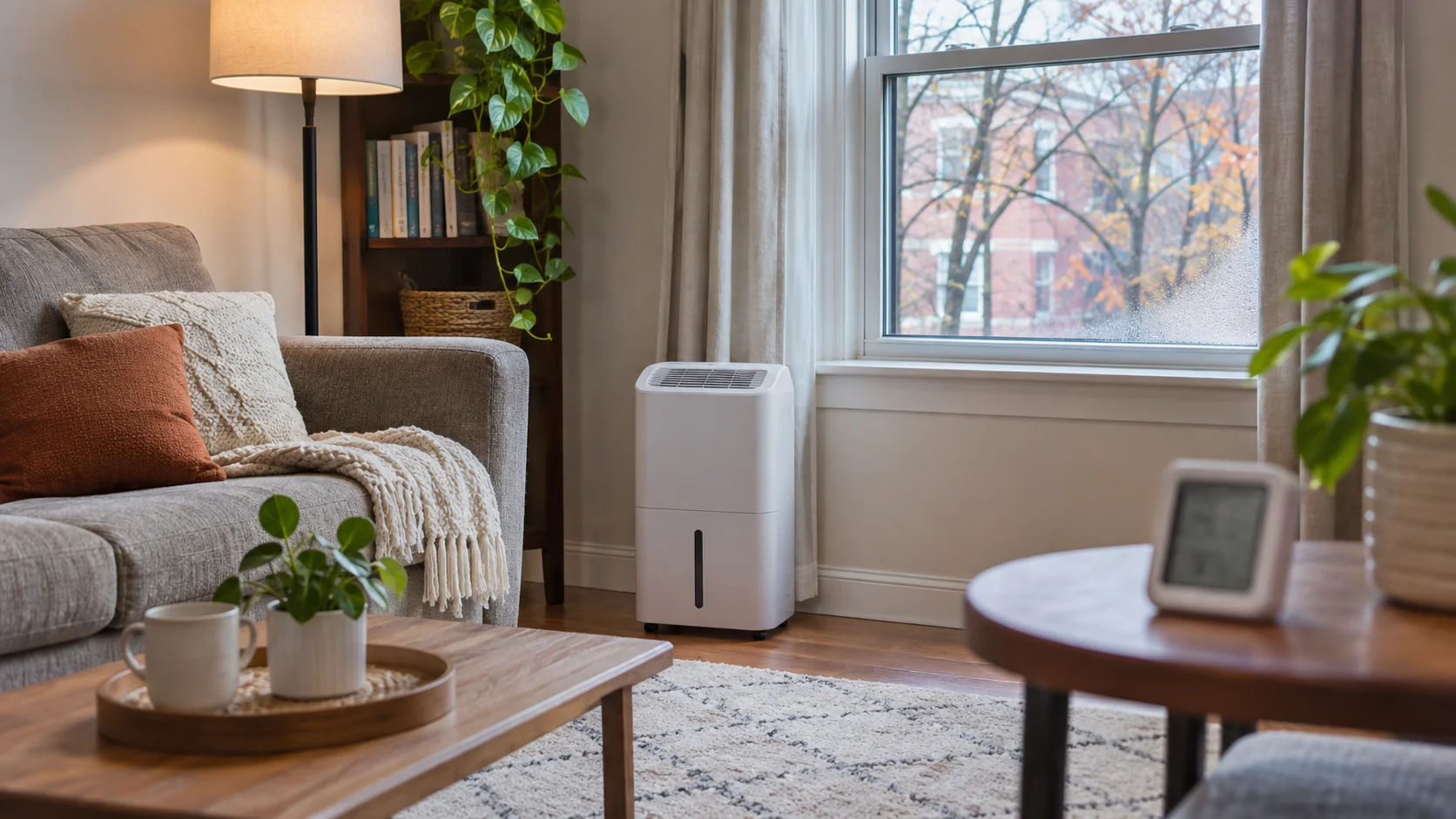
1. Measure indoor humidity. A humidity meter, also called a hygrometer, shows how much moisture is in the air. EPA guidance gives an ideal range of 30–50% relative humidity. Check it rather than guessing.
2. Watch your windows. Wipe up condensation and investigate repeated wetness. Cold windows and pipes can collect moisture; ventilation and appropriate humidity control can help.
3. Use the exhaust fans. Run the bathroom fan when showering and the kitchen exhaust when cooking. Fans that vent outdoors remove moisture; report a broken fan to maintenance.
4. Respond to persistent humidity. Air conditioning or a dehumidifier can help when needed. Follow the equipment instructions and keep drainage arrangements working.
5. Look for dampness during normal chores. Check around sinks, windows and other places where water collects. Do not ignore a recurring musty smell simply because the room looks tidy.
These habits draw on the EPA’s household moisture guide (https://www.epa.gov/mold/brief-guide-mold-moisture-and-your-home) and CDC prevention guidance (https://www.cdc.gov/mold-health/about/index.html). They cannot repair a building leak.
If you rent, report the problem early
Tell your landlord or property manager promptly about leaks, persistent dampness or suspected mold. Photograph the area and keep a dated written record of your report. Ask for the moisture source to be investigated, not just the surface repainted. EPA advises contacting health or housing authorities if persistent water problems remain unaddressed. EPA guidance for renters (https://www.epa.gov/mold/brief-guide-mold-moisture-and-your-home).
What if mold is already visible?
For a small, straightforward patch on a hard surface, EPA guidance describes cleaning with detergent and water, followed by thorough drying. Moldy porous materials, such as carpet or ceiling tiles, may need replacement. Painting or caulking over growth is not a fix.
Size is only one consideration. EPA says areas under about 10 square feet (roughly 0.9 m²) can often be handled by residents, but major water damage, sewage, suspected contamination in heating or air-conditioning equipment, or health concerns call for additional expertise. Do not run a system suspected of mold contamination. In a rental, coordinate repairs with management rather than opening walls yourself. EPA: mold cleanup in your home (https://www.epa.gov/mold/mold-cleanup-your-home).
If you undertake cleanup, use appropriate gloves, goggles and a properly fitting N95 respirator. Review the EPA’s protective-equipment guidance (https://www.epa.gov/mold/brief-guide-mold-moisture-and-your-home) first. Never mix bleach with ammonia or other cleaners. Follow product labels. CDC mold guidance (https://www.cdc.gov/mold-health/about/index.html).
Take health concerns seriously without guessing
Mold exposure can cause irritation or allergic symptoms, and people with asthma, weakened immune systems or chronic lung disease may face greater risks. Ask a health professional about symptoms or whether cleanup is appropriate for you. CDC does not recommend routine home mold testing: identifying the type is not required before addressing visible growth and moisture. CDC: mold and health (https://www.cdc.gov/mold-health/about/index.html).
A useful first step: check your humidity, test whether the exhaust fans work and save your property manager’s maintenance contact. Small checks make it easier to notice changes early.
SA Connect community information based on official sources, reviewed November 17, 2026. This is general orientation, not a property inspection, medical diagnosis or legal advice.
AI-generated illustration of a fictional home, not a photograph of an actual property.
www.epa.gov
Open link