
Reviewed November 12, 2026
Moving into a home in a colder part of America can mean getting used to central heating, unfamiliar alarms and the possibility of snow-related power outages. You do not need to buy every winter gadget at once. Start by understanding your home’s heating, checking its alarms and making a simple backup plan.
This checklist focuses on staying safe indoors. Weather conditions vary across the US, so follow local alerts and your building’s instructions.
**1. Get to know your heating before you need it**
If you rent, ask your property manager how the heating works, whom to call after hours and how to report a loss of heat. Find out whether you control the temperature or the building does.
For fuel-burning heating systems, CPSC recommends a professional inspection every year. Ask when yours was last checked rather than attempting repairs yourself. Keep the maintenance contact somewhere you can find without searching through old emails.
Source: [CPSC winter heating safety](https://www.cpsc.gov/Newsroom/News-Releases/2026/Keep-Warm-and-Safe-This-Winter-Tips-for-Using-Generators-Furnaces-and-Space-Heaters).
**2. Check both smoke and carbon-monoxide alarms**
A smoke alarm and a carbon-monoxide alarm detect different hazards. Check the labels rather than assuming one device covers both.
EPA recommends smoke alarms inside bedrooms, outside sleeping areas and on every level. CO alarms should be outside sleeping areas and on every level. Follow the manufacturer’s placement and replacement instructions, test alarms monthly and check their backup power. Report missing or faulty alarms to your property manager promptly.
Source: [EPA winter weather and indoor air quality](https://www.epa.gov/emergencies-iaq/winter-weather-and-indoor-air-quality).
Carbon monoxide has no colour or smell. Headache, dizziness, weakness, nausea or confusion can be warning signs. **If a CO alarm sounds or you suspect exposure, get everyone into fresh air, call 911 from outside and wait for emergency responders. Do not stay inside to investigate.**
Sources: [CDC carbon-monoxide basics](https://www.cdc.gov/carbon-monoxide/about/index.html) and [EPA guidance](https://www.epa.gov/emergencies-iaq/winter-weather-and-indoor-air-quality).
**3. Give a portable heater plenty of space**
If you use an electric space heater:
- Keep it at least three feet, roughly one metre, from bedding, curtains, furniture and anything else that can burn.
- Plug it directly into a wall outlet, never a power strip or extension cord.
- Turn it off before sleeping.
Place it on a firm, level surface, inspect its cord and plug, and switch it off when leaving the room. Never use your stove or oven to heat the home.
Sources: [CPSC portable-heater precautions](https://www.cpsc.gov/Newsroom/News-Releases/2026/Keep-Warm-and-Safe-This-Winter-Tips-for-Using-Generators-Furnaces-and-Space-Heaters) and [EPA heating safety](https://www.epa.gov/emergencies-iaq/winter-weather-and-indoor-air-quality).
**4. Make an outage plan that works for your home**
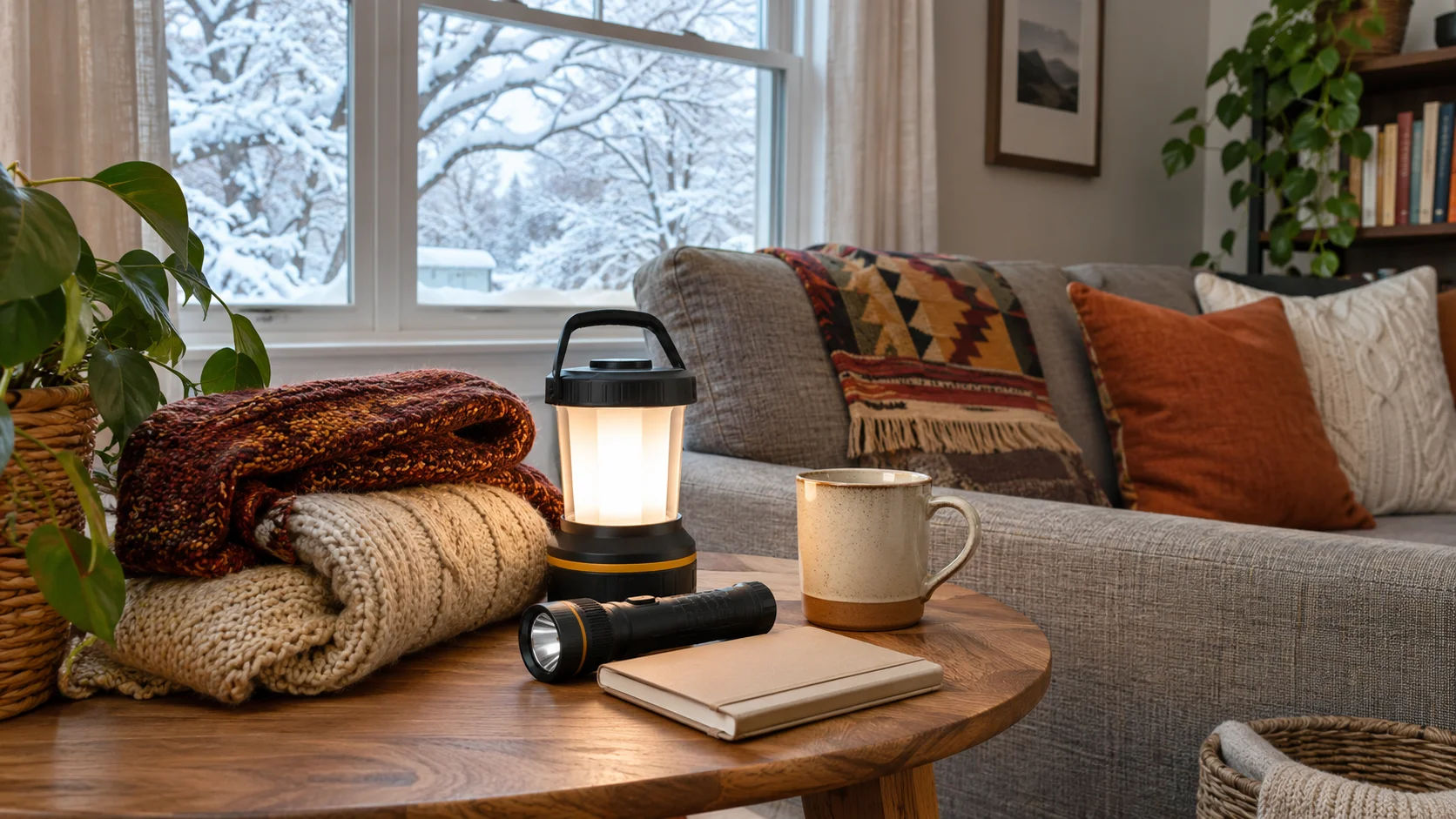
Keep blankets, warm clothing and a battery-powered light accessible. CDC recommends flashlights or battery lanterns rather than candles during a power failure. Think ahead about where you could safely stay if the home becomes too cold, particularly if someone is older or especially vulnerable to cold.
Source: [CDC winter storm safety](https://www.cdc.gov/winter-weather/safety/stay-safe-during-after-a-winter-storm-safety.html).
A fuel-powered generator must never run inside a home or garage, even with doors open. CDC says to operate one outdoors, more than 20 feet, about six metres, from windows, doors and vents. An apartment balcony should not be treated as a safe workaround.
Never bring a charcoal braai or camping gas stove indoors for heat or cooking.
Source: [CDC carbon-monoxide prevention](https://www.cdc.gov/carbon-monoxide/about/index.html).
**Your first small step**
Before the next cold spell, save your building’s emergency number, test the alarms and put a flashlight where everyone knows to find it. Then make a household plan for what you will do if the heating stops.
**Community question:** What is one thing you wish you had known before your first American winter?
This is general safety information, not a property inspection or a statement of local landlord requirements. Follow manufacturer instructions, local emergency guidance and building rules.
www.cpsc.gov ↗
Open shared link